

FIT
How Outerwear Fit Differs From Everything Else
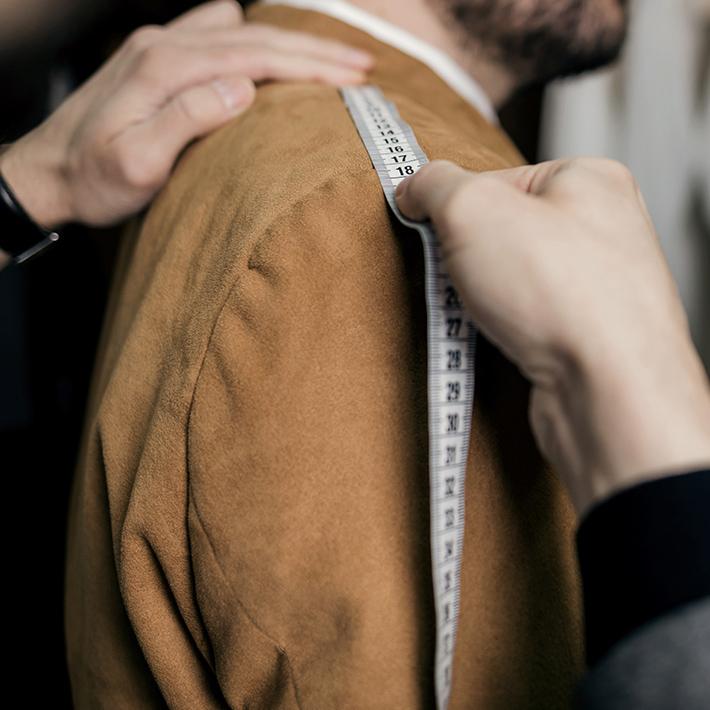
Outerwear is the one category that is not fitted to a body. It is fitted to a body plus whatever that body is wearing, which is why a jacket bought in the same size as a shirt so often disappoints. Everything below follows from that single difference.
Start With the Layer, Not the Measurement
Before looking at any number, decide what the piece will be worn over. A light jacket over a t-shirt and a mid-weight coat over a wool sweater are two different sizing problems, and the answer can move by a full size between them. Trying the jacket over a thin top and nothing else is an easy way to end up with outerwear that does not work in January.
The Shoulder Seam Is the One Hard Limit
Almost everything on a jacket can be lived with. The shoulder cannot. The seam should sit at the outer edge of your shoulder, where the arm begins to turn downward. A seam that has slid down the upper arm makes the whole piece look borrowed, and it is the one part no alteration handles cheaply. If the shoulder is right and the body is slightly generous, you have a jacket that works. The reverse is rarely true.
Do the Reach Test
Put the jacket on, close it, and reach both arms straight forward as though taking something off a shelf. Across the upper back the fabric should come with you rather than pull you back, and the front should not drag open at the closure. That movement is what a day of driving, carrying, and opening doors asks of an outer layer, and a piece that fails it will feel wrong within an hour even though it looked correct standing still.
Sleeves End Where the Cuff Underneath Ends
A jacket sleeve should cover the cuff of what is worn beneath it and finish at the wrist bone, with a little more length on a coat meant for cold weather so a gap does not open when the arm bends. Check sleeve length with a shirt or a sweater on, since a sleeve measured over a bare arm reads as an inch longer than it behaves in use.
Close It, Then Sit Down
A closed front tells you more than an open one. Fasten every button or run the zipper to the top, then sit down as though at a desk or in a car. Watch for the closure pulling into horizontal lines at the chest or the hip, and for the collar lifting away from the back of the neck. Both mean the piece is fighting the position you will spend most of your seated life in.
Between Two Sizes, Size to the Layer
When you sit between sizes, the deciding question is not which fits your body better but which fits your winter better. For a light jacket meant for mild weather, the smaller size usually keeps a cleaner line. For anything intended to go over a knit, the larger size is the one that stays useful when the temperature drops. Our FAQs page explains how to read the flat measurements on each listing, and once a piece is on its way you can follow it on our Order Tracking page.
Thank you for shopping with us, and for giving a good coat more than one winter.